


Descrição
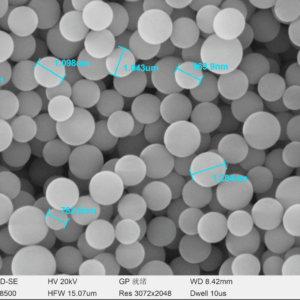
PMSQ SILICONE MICROSPHERE LIGHT DIFFUSERS
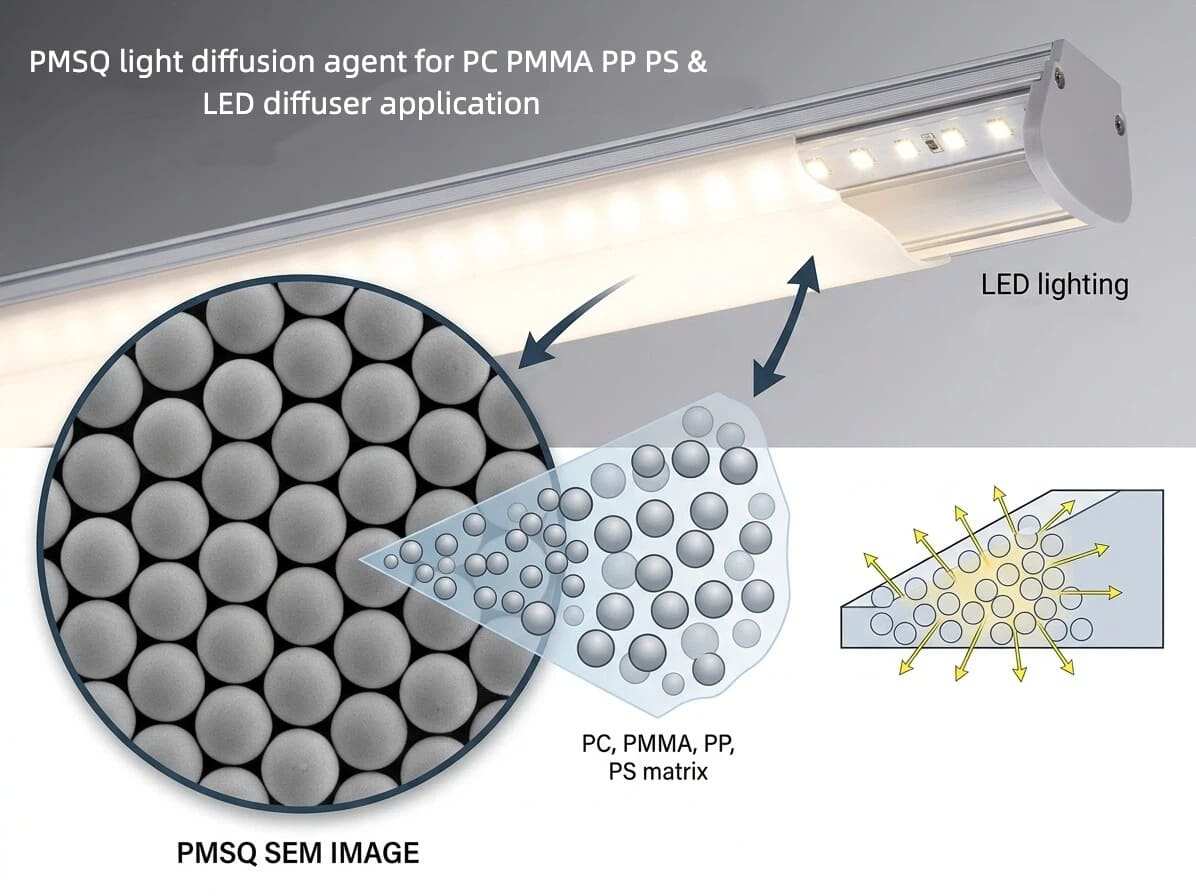
Light Diffusion Agent for PC, PMMA, PP & PS
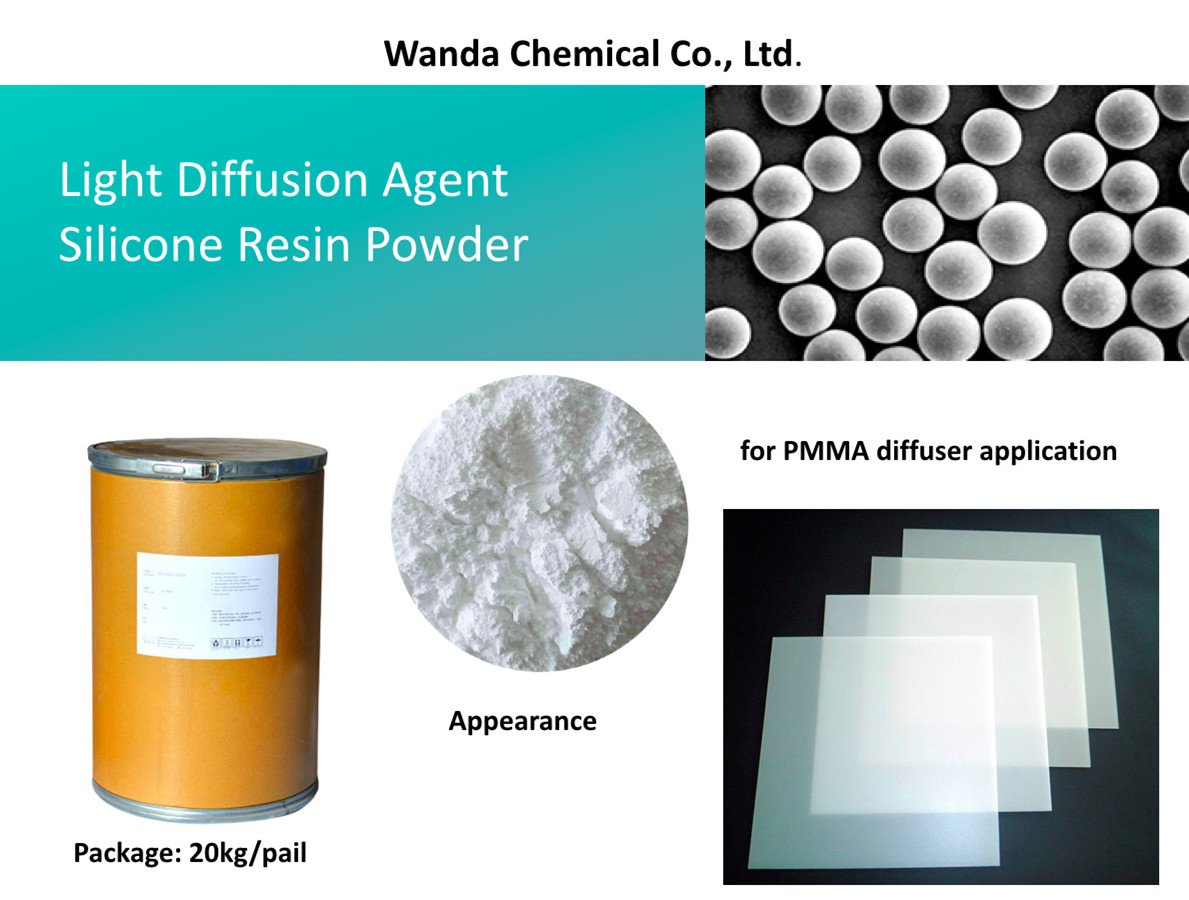
Wanda Chemical manufactures spherical PMSQ light diffusion agents for optical plastic applications where manufacturers need to balance:
Haze · Light Transmission · LED Hotspot Masking · Optical Uniformity
The right diffuser is not selected by particle size alone. A practical starting grade depends on:
Resin · Particle Size · Loading · Part Thickness · Optical Target
Quick Facts
Material
PMSQ silicone microspheres
Representative Particle Sizes
~1 μm · ~2 μm · ~2.8 μm
Typical Resins
PC · PMMA · PP · PS
Applications
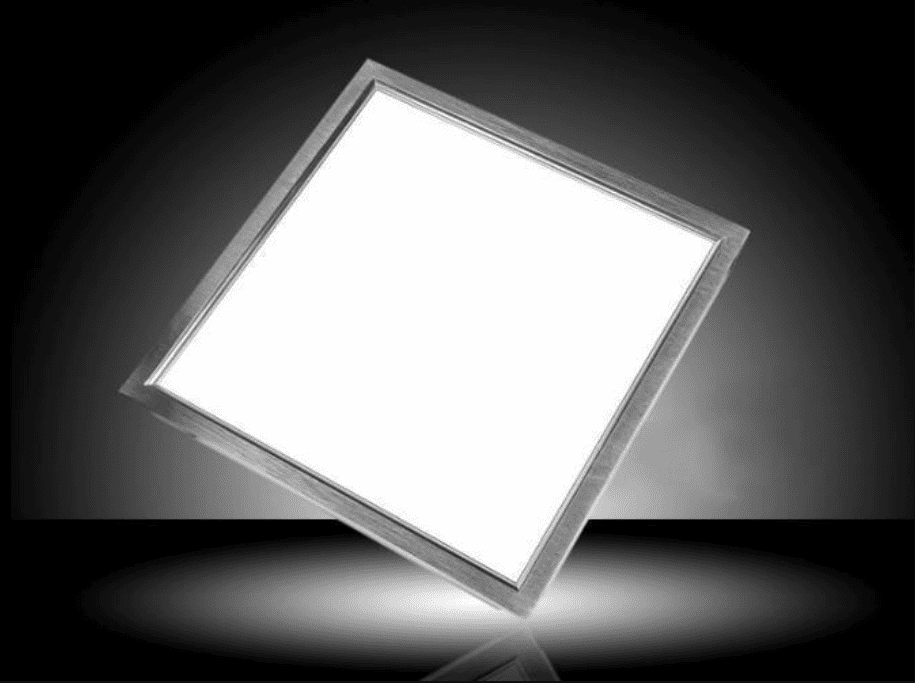
LED Lampshades · Diffuser Sheets · Lenses · Optical Covers · Masterbatch
Which Wanda Light Diffusion Grade Should You Start With?
At the same weight loading, different particle sizes can create different particle-number densities and scattering behavior.
This can influence the balance between:
- neblina
- transmission
- hotspot masking
- optical uniformity
For this reason, particle size should be treated as a selection variable, not a quality ranking.
Representative Wanda Grades
| Grau | Approx. Particle Size | Practical Starting Direction |
|---|---|---|
| WD-101 | ~1 μm | Fine-particle option when stronger scattering is being evaluated |
| WD-102 | ~2 μm | Practical starting grade for many transparent optical-plastic projects requiring a balanced diffusion/transmission result |
| WD-103 | ~2.8 μm | Larger-particle option for evaluating a different scattering and transmission balance |
These are starting directions, not guaranteed performance rankings.
Final optical performance depends on the complete system:
Grade + Resin + Loading + Thickness + Geometry
Recommended Starting Test Framework
For a new project, compare controlled variables rather than testing one grade at one dosage.
| Variable | Recommended Comparison |
|---|---|
| Grau | 1–2 relevant particle sizes |
| Loading | Several controlled dosage levels |
| Thickness | Actual production thickness |
| Measurements | Haze + transmission + visual hotspot evaluation |
| Processing | Keep molding/extrusion conditions consistent |
Not Sure Which Grade to Test?
Send us your:
Resin · Thickness · Application · Current Diffuser · Optical Target
Match the Diffuser to the Resin and Finished Part
The same diffuser grade and dosage should not automatically be copied from one polymer into another.
PC — Polycarbonate
Typical Applications
LED lampshades, tubes, lenses, lighting covers and diffuser components.
Key Selection Factors
- wall thickness
- haze/transmission balance
- LED hotspot masking
- dispersion
- processing conditions
PC is one of the most common systems for PMSQ light-diffusion evaluation.
Explore Light Diffusion for PC →
PMMA — Acrylic
Typical Applications
Optical panels, diffuser sheets, signage and lighting covers.
Key Selection Factors
- brightness retention
- haze development
- optical appearance
- dosage
- part thickness
PMMA applications often require sufficient scattering without unnecessarily sacrificing optical clarity.
Explore Light Diffusion for PMMA →
PP — Polypropylene
Typical Applications
Injection-molded LED covers, lampshades and thin-wall lighting components.
Key Selection Factors
- particle dispersion
- base-resin transparency
- thin-wall molding
- hotspot masking
- processing stability
Do not directly copy a PC formulation into PP.
Explore Light Diffusion for PP →
PS / GPPS — Polystyrene
Typical Applications
Diffuser sheets, light panels and display-related optical components.
Key Selection Factors
- sheet thickness
- neblina
- transmission
- tamanho das partículas
- loading level
PS and GPPS are useful systems for evaluating how PMSQ particle size changes optical scattering.
Explore Light Diffusion for PS →
Choose by Finished Product
| Aplicação | Main Optical Objective |
|---|---|
| LED Lampshades & Tubes | Hide individual LED points while maintaining useful brightness |
| Diffuser Sheets & Plates | Improve light distribution across a larger surface |
| Lenses & Optical Covers | Control beam distribution and hotspot visibility |
| Light Diffusion Masterbatch | Achieve stable particle dispersion before final let-down |
Start with the Optical Target, Not the Powder
A successful light-diffusion formulation is a system rather than a single additive specification.
The five main variables are:
1. Resin
PC, PMMA, PP and PS have different optical and processing characteristics.
A formulation optimized in one resin should be re-evaluated when transferred to another.
2. Particle Size
Different PMSQ particle sizes change particle-number density and scattering behavior.
The correct particle size is the one that gives the required optical balance in the actual application.
3. Loading
Higher loading usually increases scattering events, but excessive loading can reduce useful light transmission without producing proportional visual improvement.
Use controlled dosage steps during screening.
4. Part Thickness
A longer optical path gives light more opportunities to interact with diffuser particles.
Therefore, the same formulation may produce different results at:
1 mm · 3 mm · 5 mm
or in different lens geometries.
5. Optical Target
Do not optimize haze alone.
A useful lighting component normally needs to balance:
Névoa
Light-scattering strength
Transmission
Useful light output
Hotspot Masking
Visibility of individual LED points
Uniformity
How evenly light appears across the finished component
Practical Selection Rule
The best formulation is not the one with the highest haze or the highest transmission.
It is the formulation that delivers the required uniformity and hotspot masking while preserving sufficient usable light output.
Three Common Selection Mistakes
Selecting by particle size alone
Compare particle size together with resin, loading and thickness.
Copying dosage from another resin or product
Re-test under the actual material and geometry.
Evaluating only haze
Measure haze and transmission together and visually check LED hotspot performance.
Why Test Conditions Matter
Optical numbers only become useful when the test conditions are known.
Statements such as:
“90% haze”
ou
“85% transmission”
have limited technical value without knowing:
- resin
- diffuser grade
- dosage
- thickness
- geometry
- test method
Wanda therefore evaluates light-diffusion materials under defined application conditions.
Application Snapshot — WD-102 in PC
Test Material
Light Diffusion Agent: WD-102
Base Resin: PC1250Z
Aplicação
PC LED lampshade and optical lens evaluation
Test A — Approx. 1 mm PC Lampshade
| WD-102 Addition | Measured Transmission |
|---|---|
| 0 | 92% |
| 0.3 g/kg | 92% |
| 0.6 g/kg | 92% |
| 0.9 g/kg | 92% |
| 1.2 g/kg | 91% |
| 1.5 g/kg | 91% |
Observation
Within this specific thin-wall PC test, transmission changed only slightly across the tested WD-102 loading range.
This result should não be treated as a universal WD-102 performance specification.
Its main value is showing that optical response must be interpreted together with the actual component design.
Test B — PC Lenses with Different Thicknesses
WD-102 was also evaluated in PC lens designs with different maximum thicknesses.
As diffuser loading increased:
- transmission decreased
- luminous angle increased
- thicker lens geometry showed a stronger optical response
Engineering Takeaway
Thickness can materially change how the same diffuser and dosage affect the finished optical part.
This is why part thickness should be provided when requesting a grade or starting-formulation recommendation.
Data Disclaimer
These results are application-specific reference data, not guaranteed product specifications.
Final performance should be verified using the customer’s own:
- resin grade
- component geometry
- LED arrangement
- processing conditions
- optical test method
Recommended Future Upgrade
As new verified Wanda data becomes available, prioritize tables combining:
Grade + Loading + Thickness + Haze + Transmission
under the same test conditions.
This is more useful than publishing isolated haze or transmission ranges.
Why Evaluate Light Diffusion Agents with Wanda?
Wanda Chemical has worked with spherical silicone-resin powders and optical-plastic applications for decades.
Our role is not simply to offer one “best-selling” diffuser, but to help customers narrow the evaluation based on their actual optical system.
What We Can Support
Multiple PMSQ Particle Sizes
Representative commercial options allow customers to screen different particle-size starting points.
Application-Based Selection
Recommendations can be based on:
- resin
- thickness
- application
- current benchmark
- target haze
- target transmission
- hotspot requirement
Sample Comparison
For suitable projects, comparing more than one relevant grade can help identify the preferred optical balance more efficiently.
Technical Documentation
Depending on the project and grade, support can include:
- TDS
- SDS
- COA
- samples
- technical discussion
- commercial quotation
FAQ
1.) Which Wanda grade should I start with for PC?
WD-102, at approximately 2 μm, can be a practical starting grade for many PC light-diffusion evaluations.
The final choice should still be confirmed against the required haze, transmission, part thickness and hotspot performance.
2.) Is a smaller PMSQ particle always better for light diffusion?
No.
Smaller particles may create more scattering centers at the same mass loading, but final optical performance also depends on resin, loading, thickness, particle-size distribution and geometry.
3.) What dosage should I use?
There is no universal dosage.
For a new project, compare several controlled loading levels under the actual production resin and thickness.
4.) Can Wanda help benchmark my current diffuser?
Yes.
The most useful information includes:
- current supplier or grade
- tamanho das partículas
- current dosage
- resin
- part thickness
- haze/transmission data
- performance you want to improve
Not Sure Which Light Diffusion Agent to Test?
You do not need to identify the Wanda grade before contacting us.
Please Share
Resin
PC / PMMA / PP / PS / other
Aplicação
Lampshade / diffuser sheet / lens / masterbatch / other
Thickness
Current Diffuser & Dosage
if available
Target Haze / Transmission
Main Problem
Hotspots / low brightness / insufficient haze / poor dispersion / other
Get a Grade Recommendation
Grade Selection · Sample Support · TDS · Technical Discussion · Commercial Quotation

 Portuguese
  English
  German
  Spanish
  Russian
  Arabic
  Italian
  Japanese
  Korean
  Polish
  French
Avaliações
Ainda não existem avaliações.