
Descrição
High Purity Spherical Fused Silica for CCL (Copper Clad Laminate)
For CCL formulators trying to improve dielectric performance, maintain resin-system consistency, and qualify a more responsive alternative to imported spherical silica grades.
Still relying on one imported silica grade for your copper clad laminate resin system?
Trying to improve dielectric-focused formulation performance without creating new problems in dispersion, viscosity control, or laminate consistency?
Wanda’s high purity spherical fused silica is developed for CCL manufacturers and formulators who need a practical balance of low-dielectric potential, stable filler behavior, dimensional stability, and qualification-friendly supply support.
It is especially relevant for teams evaluating a backup supplier, imported-grade alternative, or second source for laminate development.
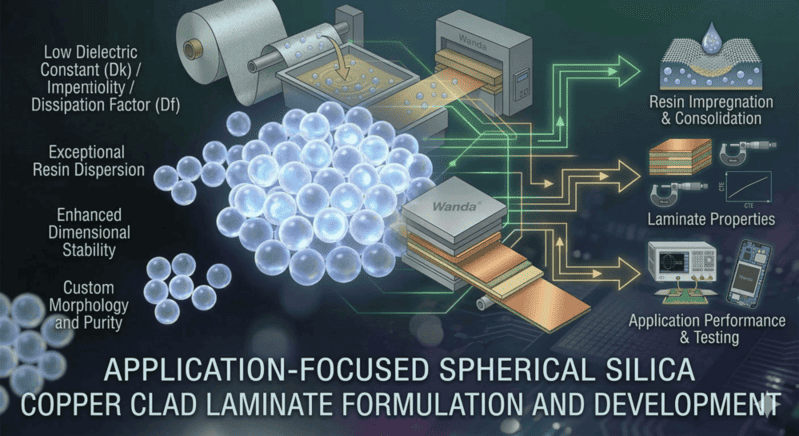
What CCL Buyers and Formulators Are Really Trying to Solve
Most CCL projects do not fail because a supplier lacks a specification sheet.
They slow down because the filler does not behave the way the formulation needs it to.
6 Problem Statements
1
Dielectric targets look good on paper, but formulation consistency becomes unstable A filler may fit a target property range, yet still create dispersion or repeatability problems in the resin system.
2
Filler loading changes resin behavior more than expected As loading increases, handling, mixing behavior, and formulation stability may become harder to control.
3
Different lots do not behave the same in laminate trials What works once may not scale smoothly if morphology or PSD consistency is not stable enough.
4
Laminate performance depends on more than purity Particle shape, filler distribution, and resin compatibility often matter just as much as chemical composition.
5
Imported grades work, but qualification flexibility is limited Many teams want a backup source, but trial support, sampling speed, or project follow-up can become a bottleneck.
6
Switching suppliers feels risky Buyers want a realistic evaluation path, not a disruptive change.
This is why CCL filler selection is not just a material decision.
It is a formulation, qualification, and supply-risk decision.
Why Spherical Fused Silica Matters in CCL Resin Systems
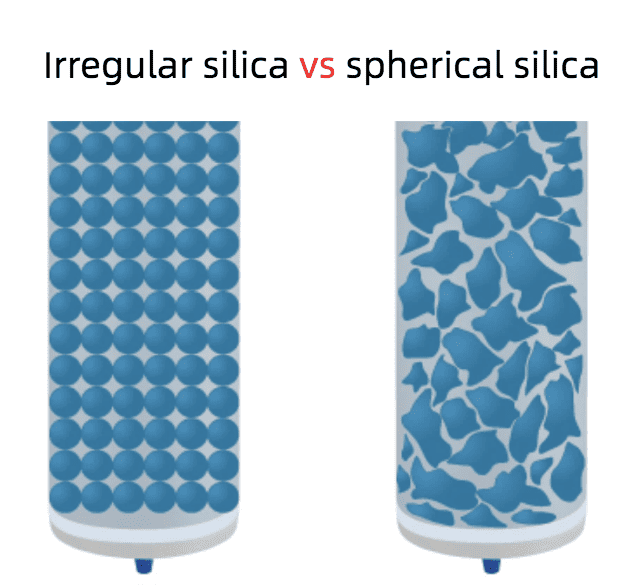
In copper clad laminate development, filler morphology affects far more than flowable powder appearance. It can influence:
-
dispersion behavior in resin systems
-
dielectric-focused formulation stability
-
laminate consistency during development
-
process repeatability during scale-up
-
dimensional stability under demanding conditions
Compared with irregular silica, spherical fused silica is often preferred when the goal is not only to fill a resin system, but to improve how that system behaves during formulation and qualification.
Right Column Benefits
-
Better dispersion consistency
-
More stable filler behavior in resin systems
-
Stronger fit for dielectric-focused formulations
-
Better support for laminate repeatability
-
Improved process control potential
-
More suitable for advanced CCL development
Why CCL Buyers Shortlist Wanda?
-
Built on Real Microsphere Manufacturing Expertise Wanda is a leading microsphere manufacturer in China, with long-standing experience in spherical particle manufacturing and morphology control.
-
New Product Line, Not a Zero-Experience Entry Our high purity spherical fused silica is newly developed, but it is built on an existing technical foundation in spherical materials and industrial-scale production.
-
Relevant to Dielectric-Focused Laminate Development The product is designed for applications where purity, shape, dispersion behavior, and formulation consistency all matter.
-
Recognized by Major Domestic Electronic Material Customers Wanda’s material has already gained recognition in demanding domestic application environments, giving overseas buyers a more credible basis for evaluation.
-
A Practical Option for Second-Source Qualification Wanda is especially relevant for teams that need a backup source, faster sample support, or more flexible project follow-up.
You are not being asked to replace your current supplier overnight.
You are being offered a more evaluation-friendly path to supply flexibility.
What Serious CCL Buyers Compare Before Testing a New Filler Grade ?
When CCL teams evaluate a new spherical silica source, they usually compare much more than purity or datasheet format.
-
Dielectric Fit
Can the filler support resin systems targeting lower dielectric constant and lower dielectric loss?
-
Resin Compatibility
Will the material behave stably inside the intended laminate resin system?
-
Dispersion Repeatability
Can the filler distribute consistently enough for repeatable trial and scale-up results?
-
Morphology Control
Is the particle shape controlled well enough to support formulation stability?
-
Dimensional Stability Relevance
Does the material help support stable laminate behavior under demanding application conditions?
-
Qualification Friendliness
Can the supplier provide samples, respond quickly, discuss PSD, and support project follow-up efficiently?
For many buyers, the real question is not “Who has silica?”
It is “Who can actually support a smoother qualification process?”
How Wanda’s High Purity Spherical Fused Silica Supports CCL Development ?
Wanda’s material is designed around the issues that matter most in laminate formulation work.
-
High Purity Suitable for demanding electronic material systems where stable formulation behavior matters.
-
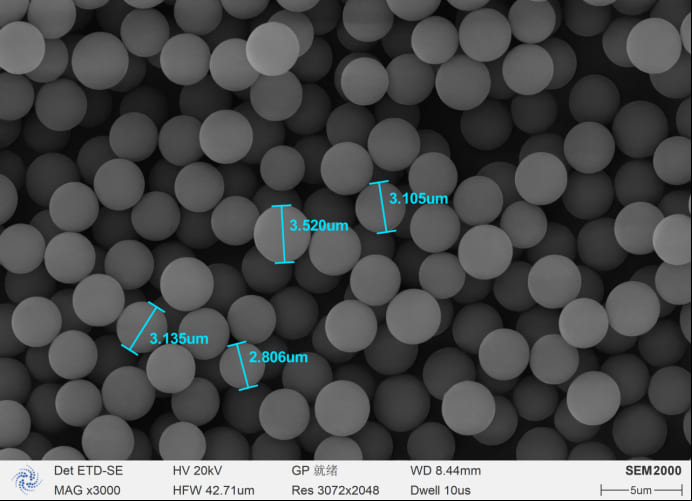
Excellent Sphericity Helps improve filler behavior and supports more stable processing in resin systems.
-
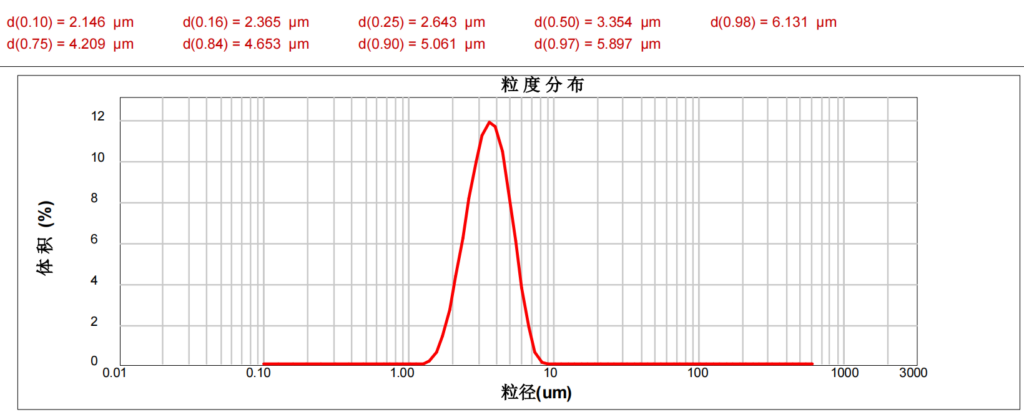
Uniform Particle Size Supports more repeatable laminate formulation development and batch consistency.
-
Low Dielectric Constant / Low Dielectric Loss A strong fit for CCL systems targeting dielectric-focused performance.
-
Excellent Insulation Performance Supports electronic substrate applications where insulation consistency matters.
-
Small Linear Expansion Coefficient Relevant to dimensional stability-focused laminate systems.
-
Customizable PSD (0.5–10 μm) Allows discussion based on resin system, formulation goals, and qualification direction.
Still Using One Imported Silica Grade for CCL Development?
That may work — until you need faster sampling, more flexible trial support, broader qualification coverage, or a lower-risk backup source.
In many laminate programs, the goal is not immediate replacement.
The goal is to build a second source that can support:
-
supply flexibility
-
faster response during evaluation
-
lower dependency on one imported channel
-
broader qualification planning
-
more efficient project support
That is where Wanda becomes highly relevant.
For overseas buyers already using imported spherical silica grades, Wanda offers a realistic route for backup qualification, alternative-grade review, and second-source planning without forcing a disruptive supplier switch.
Who This Page Is Most Relevant For?
-
CCL Formulators Working on Dielectric-Focused Resin Systems For teams trying to improve dielectric targets without destabilizing resin behavior.
-
Laminate R&D Teams Reviewing Imported Alternatives For projects where current imported grades are too rigid, too costly, or too slow for broader evaluation.
-
Buyers Building a Second-Source Strategy For teams reducing dependence on a single filler source.
-
Projects Needing Faster Sample and Qualification Support For customers who want a more responsive evaluation partner.
FAQ About Spherical Silica for CCL
Q1
How does spherical silica affect dielectric performance in CCL systems? Spherical silica can be a strong fit for dielectric-focused laminate formulations because particle morphology and formulation consistency both influence overall material behavior.
Q2
Why does filler morphology matter in copper clad laminate resin systems? Because morphology affects dispersion stability, filler behavior, process consistency, and trial repeatability in resin-based laminate formulations.
Q3
Can spherical fused silica improve dispersion consistency em CCL formulations? It can help support more stable filler behavior in resin systems compared with irregular silica, especially where repeatability matters.
Q4
What do buyers compare before switching from imported silica grades? They usually compare dielectric fit, resin compatibility, morphology, dispersion repeatability, qualification support, and second-source practicality.
Q5
Can China-made spherical fused silica be used as a second source for CCL? Yes. It is especially relevant for teams looking to build a backup or alternative source without immediately replacing their main supplier.
Q6
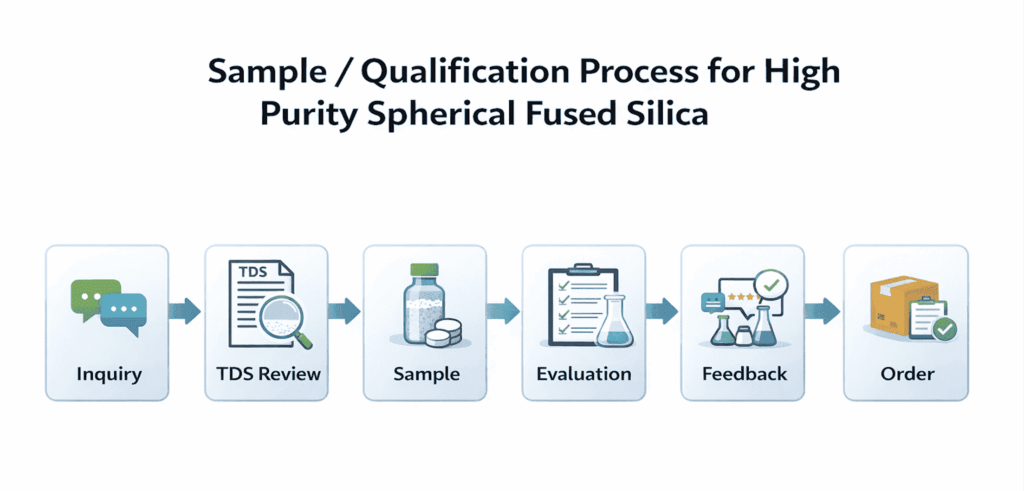
Can Wanda support sample evaluation for laminate development? Yes. Wanda can support TDS review, sample supply, PSD discussion, and qualification-oriented project communication.
Q7
What particle sizes are available for evaluation? Wanda can discuss customizable particle size distribution options from 0.5 to 10 μm depending on the formulation target and project needs.
Looking for a More Qualification-Friendly Spherical Silica Supplier for CCL?
Whether you are developing a dielectric-focused laminate formulation, reviewing an imported alternative, or building a backup supplier strategy for future programs, Wanda is ready to support your project with samples, technical communication, and application-oriented follow-up.
Contact Prompt
Tell us your resin system, dielectric direction, current imported grade, or PSD target. Our team will suggest the most relevant evaluation route.
 Portuguese
  English
  German
  Spanish
  Russian
  Arabic
  Italian
  Japanese
  Korean
  Polish
  French
Avaliações
Ainda não existem avaliações.