
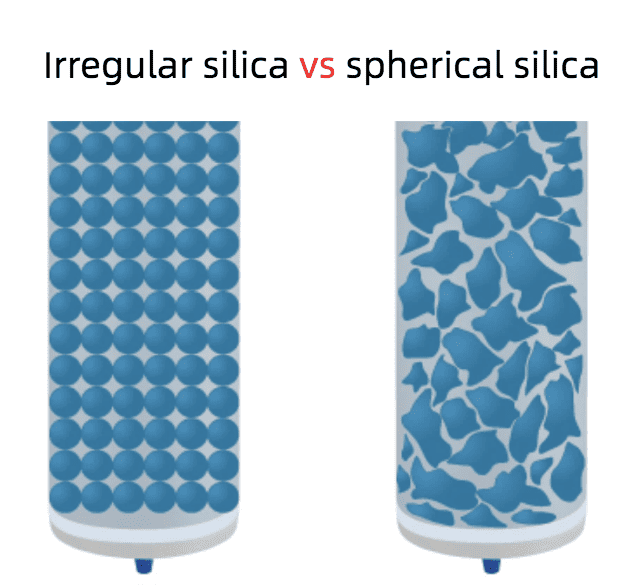
Irregular Silica vs Spherical Silica: What Really Changes in Formulation Performance?
At first glance, silica is silica.
For many buyers and formulators, the first comparison starts with purity, particle size, or price. But once a formulation enters real testing, another factor often becomes much more important than expected: particle morphology.
The difference between irregular silica and spherical silica is not only about appearance under a microscope. In many real systems, it affects how the filler behaves during mixing, dispersion, handling, qualification, and scale-up.
That is why the comparison matters.
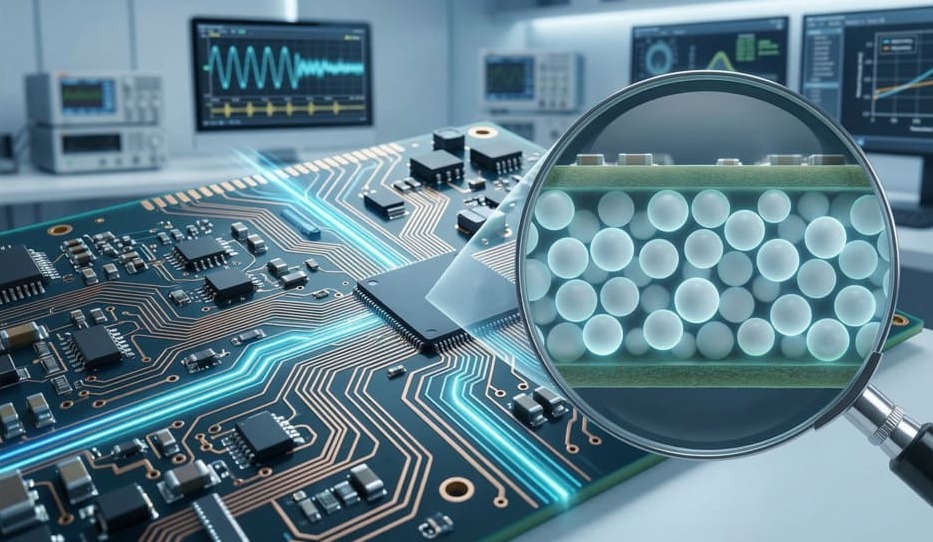
For teams working on EMC, electronic encapsulation, copper clad laminate systems, PCB-related material projects, and other insulation-focused applications, morphology is often not a secondary detail. It is a practical formulation variable.
Why particle shape matters more than many buyers expect
When two silica fillers look similar on paper, it is easy to assume they will behave similarly in the formulation. In practice, that is not always the case.
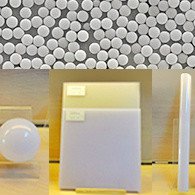
Irregular silica typically has angular, jagged, or non-uniform particles. Spherical silica, by contrast, has a more rounded and regular morphology. That difference can change how particles move, pack, disperse, and interact inside a resin system.
As formulation demands become more sensitive, these differences often become easier to see.
A system that looks acceptable in early screening may behave very differently once filler loading increases, trial conditions expand, or qualification becomes more demanding.
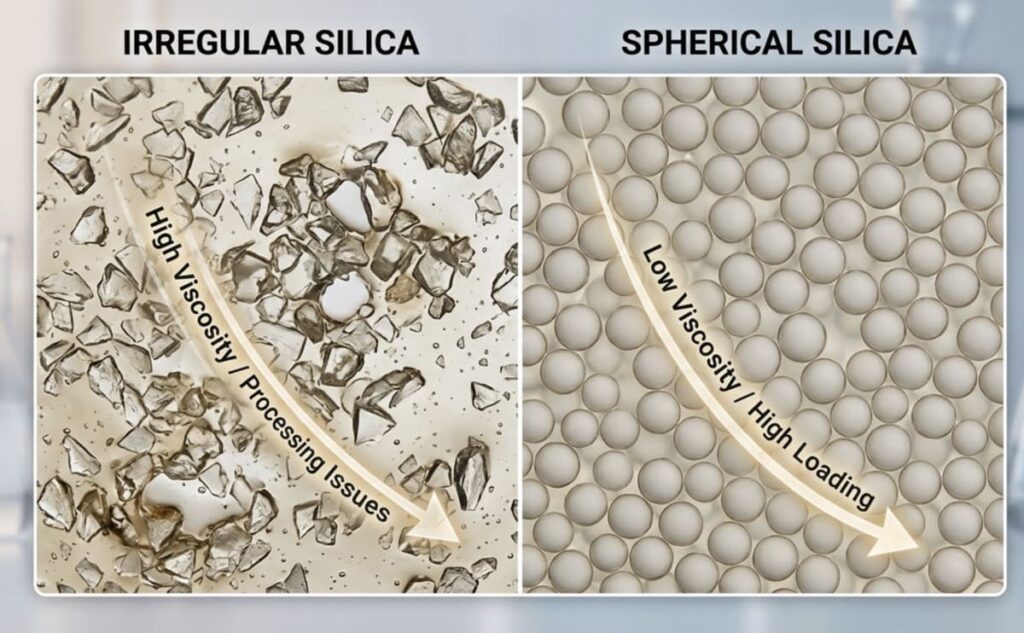
Where the difference usually shows up
- Flowability
One of the most common differences between irregular silica and spherical silica appears in flow behavior.
Irregular particles often create more internal friction. As loading increases, the system may become harder to handle, less smooth in movement, or less stable in processing behavior.
Spherical silica is often preferred when formulators want a filler that moves more predictably within the system. Rounded particles usually create less resistance, which can support better handling and more stable flow behavior.
- Dispersion behavior
Dispersion is another major difference.
A filler can look acceptable in specification review, but still behave unevenly in a real resin system. That is especially true when particle morphology is less regular.
Spherical silica is often easier to evaluate in formulations where more stable filler behavior is important. More regular particle shape can help support more consistent distribution, which in turn can improve confidence during screening and qualification.
- Viscosity response
In many filled systems, the challenge is not just reaching a target loading level. The challenge is reaching it without making the formulation too difficult to process.
Irregular silica may increase formulation friction more quickly as loading rises. This can make viscosity harder to manage and narrow the practical processing window.
Spherical silica is often reviewed when buyers need a more manageable balance between filler loading and processability.
- Qualification repeatability
This is where morphology becomes especially important.
A filler that works once in a lab trial may still create uncertainty in broader review. If behavior changes too much between runs, batches, or project stages, qualification becomes harder.
In many demanding material systems, spherical silica is preferred because it often supports more predictable filler behavior during evaluation.
Does this mean irregular silica is always the wrong choice?
No.
Irregular silica may still be acceptable in many cost-sensitive or less demanding systems. If process stability requirements are moderate and qualification pressure is low, it can remain a practical option.
The real question is not which filler is universally better.
The real question is: which filler is better for the performance risk, process requirements, and qualification demands of your project?
When spherical silica deserves closer review
It usually makes sense to look more seriously at spherical silica when:
- viscosity rises too fast as loading increases
- dispersion behavior feels inconsistent
- qualification repeatability becomes a concern
- processing stability matters more than before
- the team is reviewing a backup source or imported alternative
- the application is becoming more performance-sensitive
For many teams, this is the point where morphology stops being a background detail and becomes a real decision factor.
Why this matters in electronic materials
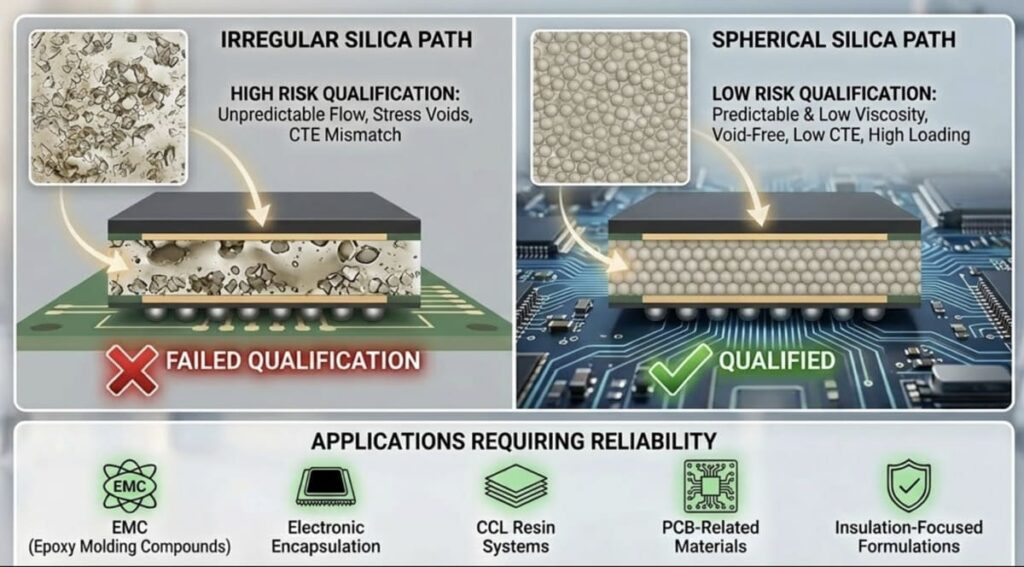
In higher-value electronic material systems, buyers are not just comparing “whether silica can be used.” They are comparing which filler gives them a more stable and lower-risk route through qualification.
That is why spherical silica is often reviewed more seriously in systems such as:
- EMC (epoxy molding compounds)
- electronic encapsulation materials
- CCL resin systems
- PCB-related material projects
- insulation-focused formulations
In these systems, the value of spherical morphology often becomes clearer as the project moves beyond early screening.
Final thought
The difference between irregular silica and spherical silica is not just visual. It often shows up in the places that matter most during formulation and qualification: flowability, dispersion, viscosity response, filler loading behavior, and repeatability.
If your system is becoming harder to control, it may be time to review morphology more closely.
Need a more predictable filler option for EMC, CCL, PCB, or encapsulation systems? Request Wanda’s TDS and sample support to start a practical evaluation.
 Japanese
  English
  German
  Spanish
  Russian
  Arabic
  Italian
  Korean
  Portuguese
  Polish
  French