


Description
Polymethylsilsesquioxane (PMSQ) Silicone Microspheres
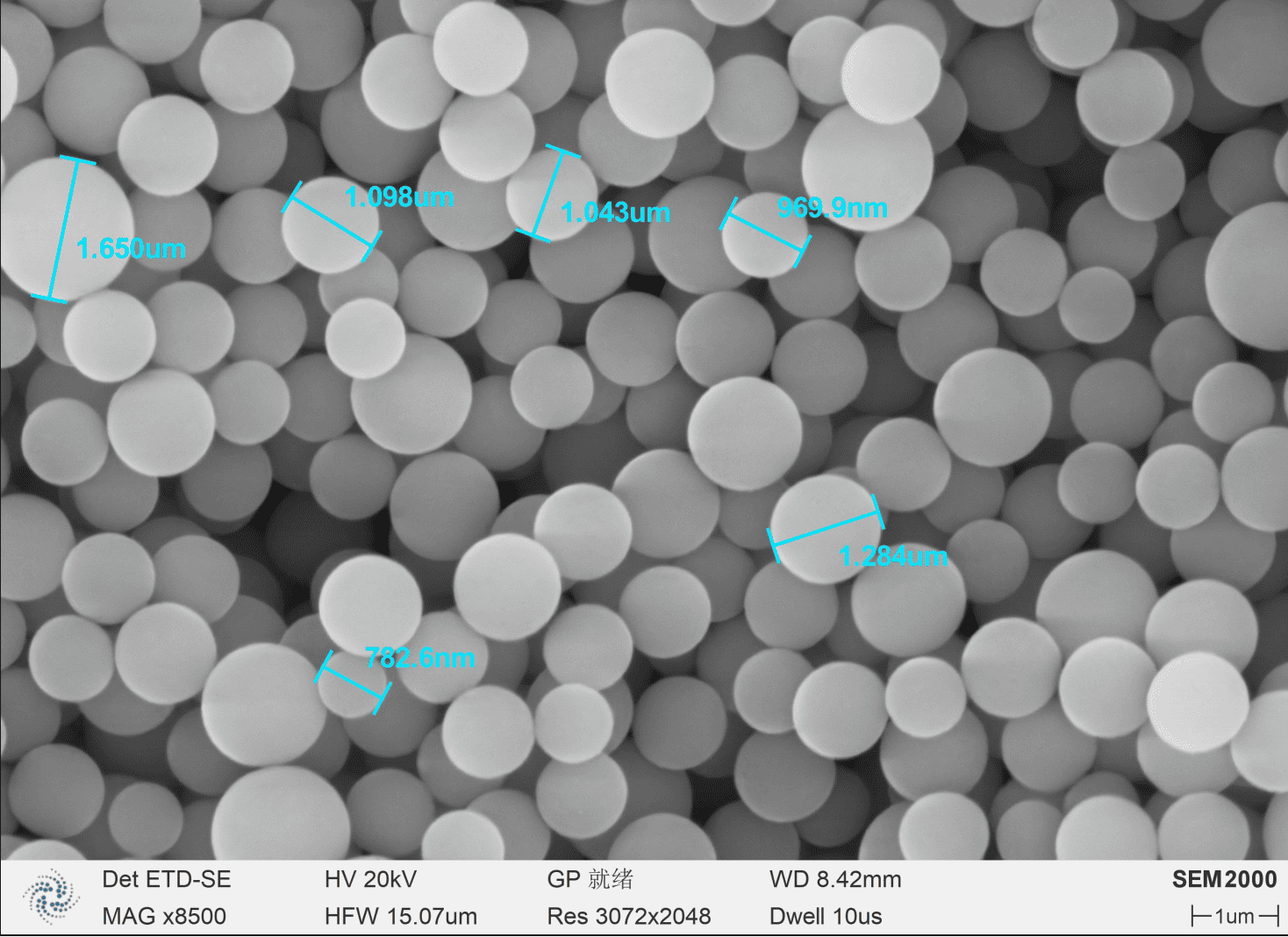
Wanda Chemical manufactures spherical PMSQ powders in multiple controlled particle-size grades for light diffusion, polymer films, coatings, inks and personal-care applications.
Instead of recommending one PMSQ grade for every project, we help customers select a practical starting grade based on the application, base material, particle size, product thickness and target performance.
Find a PMSQ Grade for Your Application
Particle size is one of the most important variables when selecting PMSQ.
A smaller particle is not automatically better than a larger particle. The right grade depends on what the particle needs to do inside the final formulation.
Wanda’s PMSQ portfolio covers multiple micron-size ranges so customers can compare suitable starting points before commercial qualification.
| Wanda Grade / Range | Typical Particle Size | Typical Evaluation Focus | Application Direction |
|---|---|---|---|
| WD-101 | ~1 μm | Fine-particle modification, optical clarity | Optical systems, coatings |
| WD-102 | ~2 μm | Balance of fine dispersion and particle effect | Light diffusion, polymer systems |
| WD-A04/A05 | 4~5 μm | Stronger particle and surface contribution | Coatings, films, selected optical systems |
| WD-A08 | ~8 μm | Surface modification and spacing effect | Polymer-film anti-blocking |
| Other PMSQ grades | Up to ~15 μm | Application-specific surface or textural effects | Film, coatings, cosmetics, specialty systems |
Grade selection should always be confirmed against the actual formulation.
Resin type, dosage, thickness and processing conditions can change the result even when the same PMSQ particle size is used.
Particle Size Is a Selection Variable — Not a Quality Ranking
The correct question is not:
“Which PMSQ particle size is best?”
It is:
“Which PMSQ grade gives the required effect in my formulation?”
Tell Us Your Application → Get a Grade Recommendation
Where Can PMSQ Silicone Microspheres Be Used?
Different industries use the same PMSQ material family for very different reasons. Start from your application rather than selecting from particle size alone.
01. PMSQ for Light Diffusion
PC · PMMA · PP · PS
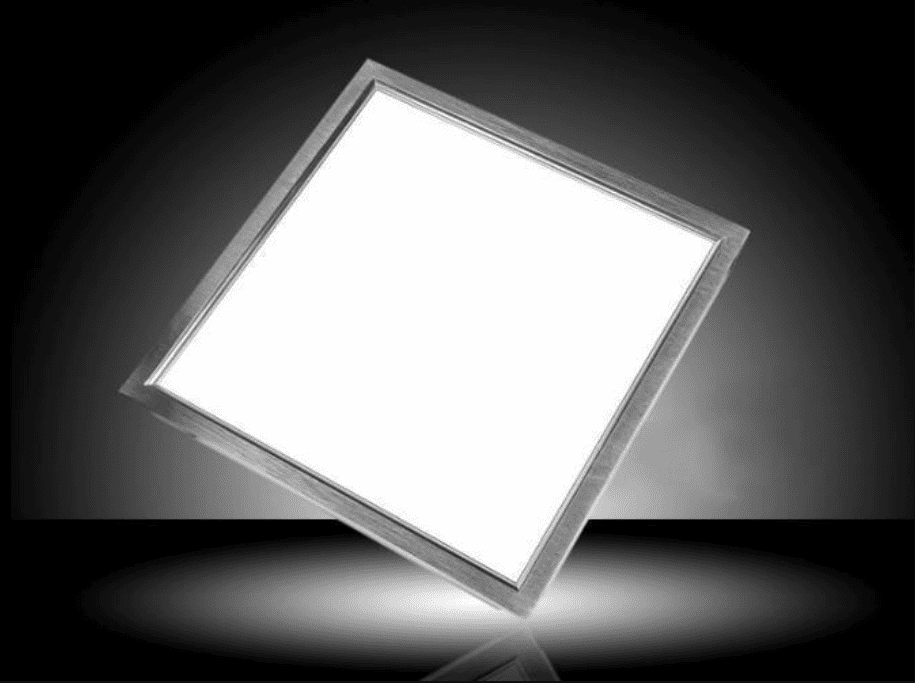
PMSQ silicone microspheres can be evaluated as light-diffusing particles in LED lampshades, diffuser sheets, lighting covers and light-diffusion masterbatch.
A successful formulation usually needs to balance:
- light transmission
- haze
- LED hotspot masking
- light uniformity
- dosage
- product thickness
- dispersion
For optical applications, particle size should be tested together with the actual resin and wall thickness.
Explore Light Diffusion Solutions →
02. PMSQ for Polymer Film
BOPP · CPP · PE · Selected PET Systems
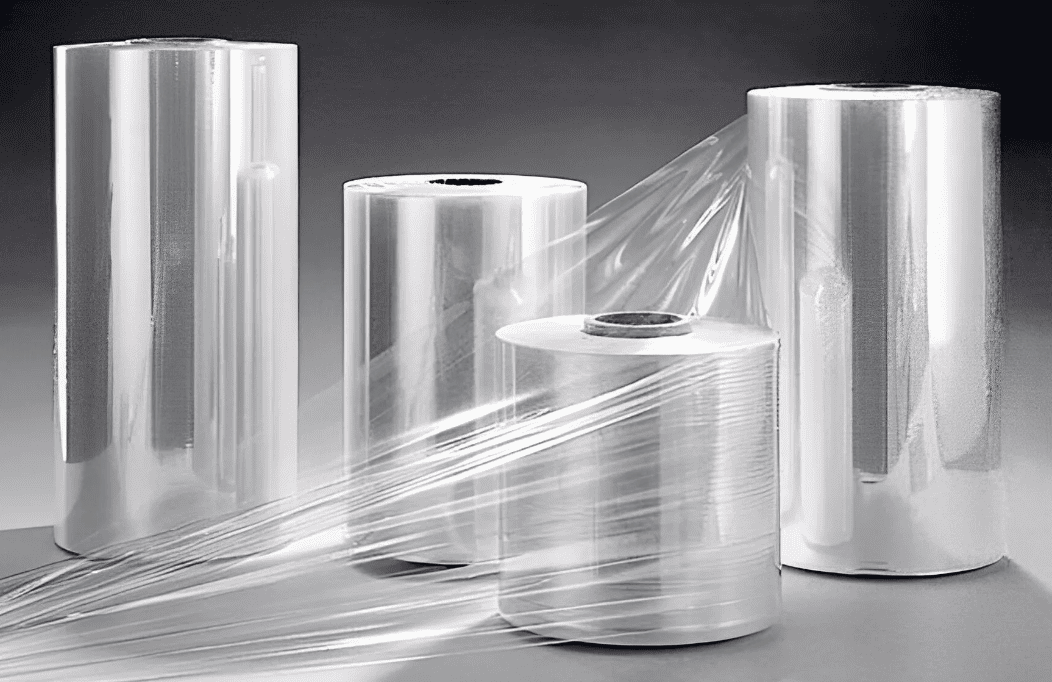
Spherical PMSQ can be evaluated as an anti-blocking and surface-modification additive where film producers need improved opening and reduced blocking without unnecessarily sacrificing optical appearance.
Key selection factors include:
- particle size
- film thickness
- surface-layer thickness
- additive loading
- haze requirement
- coefficient-of-friction target
Explore PMSQ for Polymer Film →
03. PMSQ for Coatings & Inks
Spherical PMSQ can be used to evaluate changes in:
- smooth touch
- slip
- matting
- surface feel
- appearance
- surface modification
For thin coatings in particular, the relationship between particle size and dry-film thickness should be considered before selecting a grade.
Explore PMSQ for Coatings & Inks →
04. PMSQ for Cosmetics & Personal Care
Polymethylsilsesquioxane is used in personal-care formulations where formulators want to modify sensory and optical properties.
Depending on the grade and formulation, PMSQ may contribute to:
- silky sensory feel
- smoother application
- soft-focus effects
- matte appearance
- powder texture
- formulation aesthetics
Cosmetic-grade selection should also consider documentation and regulatory requirements relevant to the target market.
How Should You Select a PMSQ Grade?
For most projects, particle size alone is not enough information.
We recommend evaluating at least the following five factors.
1. What Is the Application?
A 2 μm particle used in an LED diffuser is solving a very different problem from a 2 μm particle used in a coating.
Start with the function you need:
Light diffusion? Anti-blocking? Surface feel? Matting? Sensory modification?
2. What Is the Base Material?
Tell us whether the PMSQ will be used in:
- PC
- PMMA
- PP
- PE
- PET
- coating resin
- ink
- cosmetic formulation
- another system
Compatibility and final performance depend on the surrounding formulation.
3. What Particle Size Are You Currently Using?
If you already use another PMSQ, silica, polymer bead or benchmark material, share its:
- D50
- D90 if available
- morphology
- current dosage
- supplier grade
This often allows a much faster starting-grade recommendation.
4. What Is the Product Thickness?
Thickness is particularly important for:
Optical Parts
A 1 mm diffuser and a 10 mm diffuser should not automatically use the same additive loading or particle size.
Polymer Film
Particle size should be considered relative to film and skin-layer thickness.
Coatings
A 2–3 μm dry film behaves differently from a much thicker coating when micron-sized particles are introduced.
5. What Performance Are You Trying to Improve?
Examples include:
Optical
- higher haze
- higher transmission
- better LED hotspot masking
- improved light uniformity
Film
- easier opening
- lower blocking
- controlled haze
Coatings
- smoother touch
- lower gloss
- more slip
- different surface texture
Cosmetics
- silky feel
- matte appearance
- soft-focus effect
Practical Selection Principle
Application + Base Material + Particle Size + Thickness + Target Performance
These five inputs are usually more useful than simply asking:
“Which PMSQ grade is your best seller?”
Share Your Requirements with Our Team
Why Work with Wanda Chemical for PMSQ?
Wanda Chemical has worked with functional spherical silicone-resin powders since 1996, supporting applications across optical materials, polymer films, coatings and personal-care formulations.
Our value is not simply supplying white powder in different particle sizes.
It is helping customers move from material selection → sample evaluation → qualification → commercial supply.
Multiple Controlled Particle Sizes
Commercial PMSQ options across fine and larger micron ranges allow customers to screen different particle effects for different applications.
Application-Based Recommendations
We do not recommend a grade based only on the words “PMSQ powder.”
Where possible, our team considers:
- base resin or formulation
- application
- thickness
- target performance
- existing benchmark
before suggesting an initial grade.
Sample Evaluation Support
New projects can start with sample evaluation before moving to commercial quantities.
Testing more than one suitable particle-size option can often be more useful than choosing one grade from a catalogue alone.
Manufacturing & Quality Control
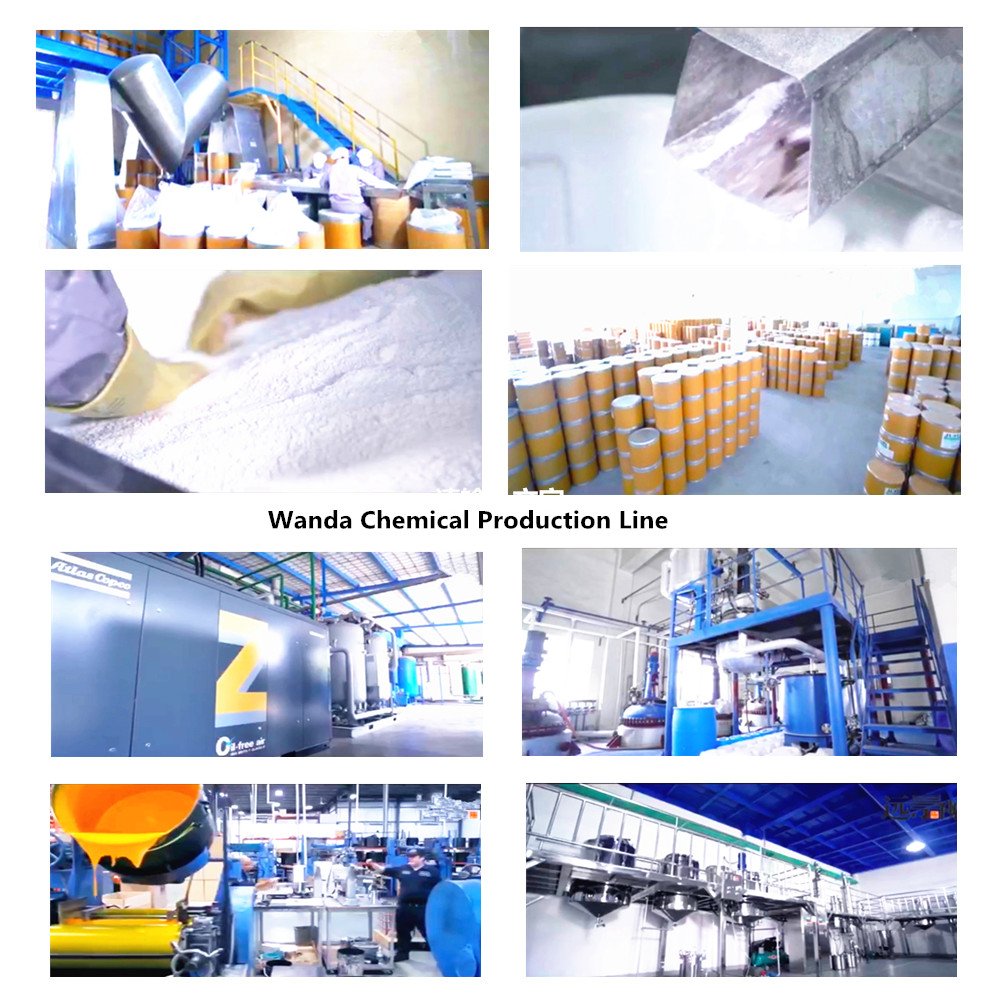
Wanda combines PMSQ manufacturing with particle-size control, quality inspection and technical documentation for industrial customers.
Available documentation can include, depending on the grade and project:
- TDS
- SDS
- COA
- regulatory declarations where applicable
From Trial to Commercial Supply
Once the suitable grade is confirmed, our team can support the transition from initial sample testing to regular commercial supply.
Visual Proof
Use real Wanda images:
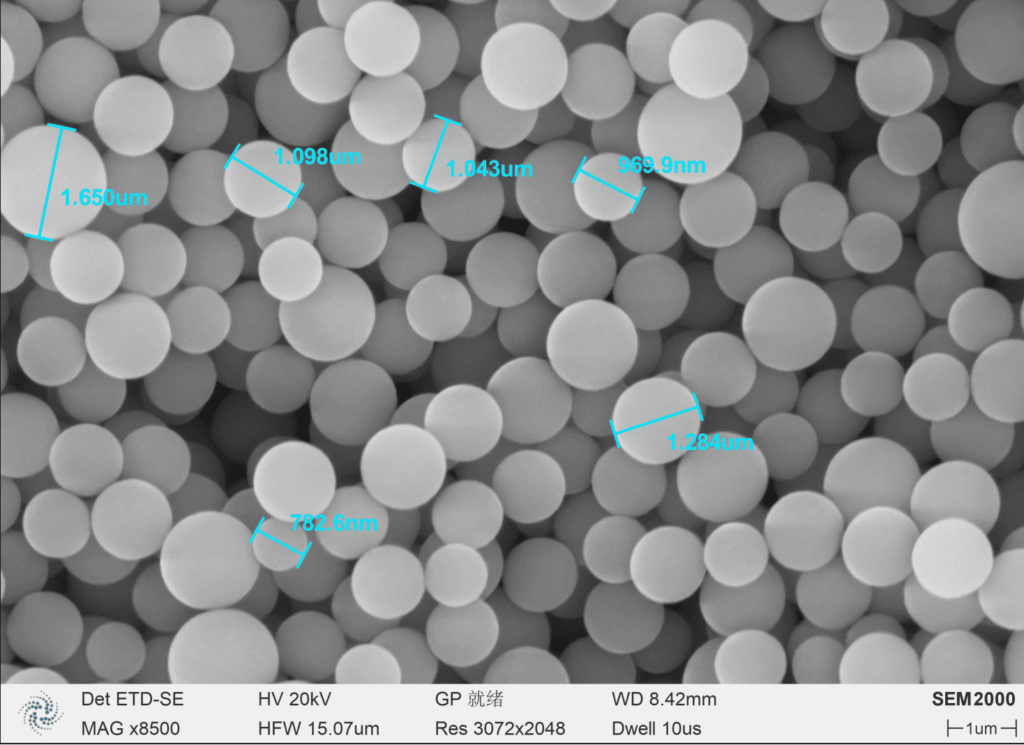
- PMSQ SEM
- particle-size testing
- production line
- laboratory
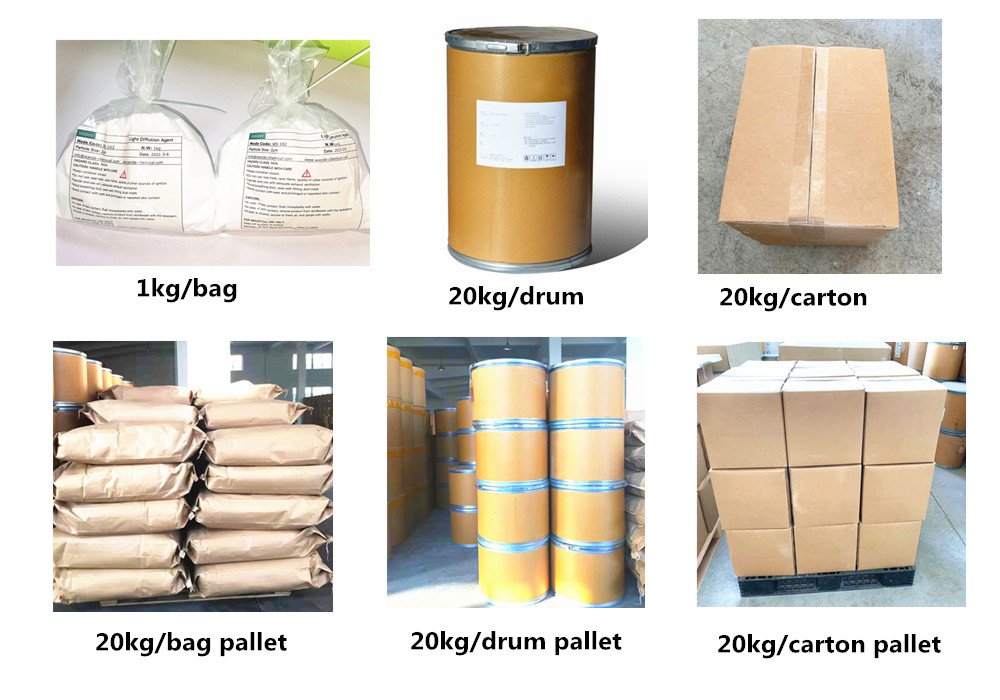
- finished packaging
Learn More About Wanda Chemical
PMSQ Buying & Selection FAQ
1). What is PMSQ?
PMSQ is short for polymethylsilsesquioxane, a crosslinked silicone-resin material. Wanda supplies PMSQ in spherical micron-sized powder form for applications including light diffusion, polymer films, coatings and cosmetics.
2).What PMSQ particle sizes does Wanda offer?
Wanda manufactures multiple PMSQ particle-size grades across approximately 0.5–15 μm. Different grades are designed to provide practical starting points for different applications.
3). How do I choose between 1 μm, 2 μm, 5 μm and 8 μm PMSQ?
Start with the application rather than the number alone. The same particle size can behave differently depending on the resin or formulation, dosage, thickness and performance target.
Share these details with us and we can suggest appropriate grades to evaluate.
4).Can I request more than one PMSQ grade for testing?
Yes. For a new application, comparing two or more relevant particle sizes can be more informative than selecting one grade based only on a TDS.
5).What information should I provide before requesting a recommendation?
Ideally provide:
- base resin or formulation
- application
- product or film thickness
- target performance
- current material or benchmark
- desired particle size, if already known
Not Sure Which PMSQ Grade to Test?
Tell us what you are making and what you want to improve.
Share With Us
Base Material
PC, PMMA, PP, PE, coating, cosmetic formulation, etc.
Application
LED diffuser, film, coating, cosmetics, etc.
Thickness
Where relevant
Target Performance
Haze, transmission, anti-blocking, surface feel, matting, etc.
Current Benchmark
If available
TDS · SDS · Sample Support · Technical Discussion · Commercial Quotation
 English
  German
  Spanish
  Russian
  Arabic
  Italian
  Japanese
  Korean
  Portuguese
  Polish
  French
Reviews
There are no reviews yet.